 EN
 es
 fr
 pt
 ru
 ar
 de
 ja
 ko
 he
 tr
 nl
 it
 pl
 uk
 sk
 th
 da
 ro
 sv
 lt
 bg
 fi
 hr
 no
 ga
 sl

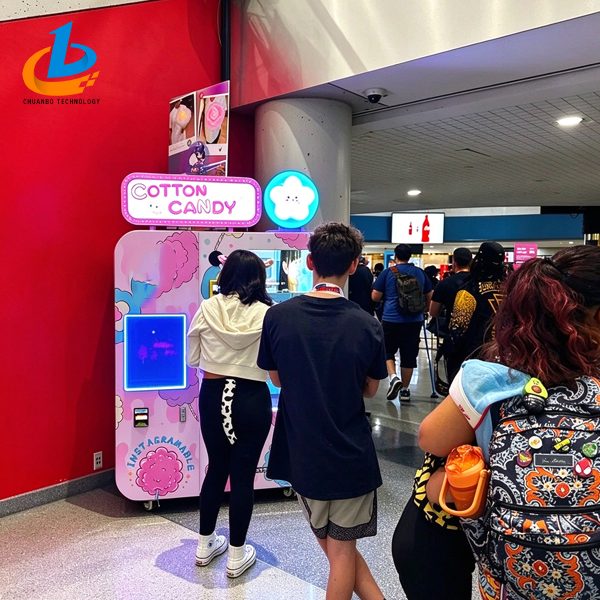
What the Automatic Production Cycle Must Actually Include
Separate cotton candy formation from the vending sequence when discussing automation. Conventional cotton candy equipment uses a heated, rotating floss head to produce the sugar strands; manufacturer operating guidance treats heat control and head rotation as distinct operating functions. That general mechanism does not establish the design of any Chuanbo model. ([gmpopcorn.com](https://www.gmpopcorn.com/resources/how-tos/how-to-setup-use-and-clean-the-3015-cotton-candy-machine?utm_source=openai)) A vending configuration also needs a defined sequence between the customer's request and collection of the finished serving. The supplied Chuanbo information does not identify how sugar feeding, serving support, portion formation or product handover are implemented. Treat these as functions to explain, not features already included. During Chuanbo's Requirement Consultation stage, ask for a cycle diagram or demonstration showing each operation in order. It should distinguish customer actions, machine-controlled actions and staff intervention. Pay particular attention to what happens between consecutive orders and after an interrupted cycle. This provides a concrete meaning for "automatic" without assuming continuous unattended operation, automatic cleaning or a particular serving mechanism. The purpose is to understand the equipment boundary before assigning performance expectations to it.